

Last winter, I went through a rough two-week stretch – the kind where sleep feels like something that happens to other people. Every night, Milo would jump up, do his standard three circles, and press himself against the backs of my knees. Not once did he settle anywhere else. And every morning, I woke up feeling fractionally more human than I had the night before.
I assumed that was just Milo being Milo. It turns out it was biology.
The conventional wisdom for decades has been that dogs belong on the floor. That letting them on the bed disrupts your sleep, confuses the “hierarchy,” and creates bad habits. Most of that advice came from dominance theory – a model of dog behavior built on studies of unrelated captive wolves that has since been largely abandoned by modern animal behaviorists. What the actual research shows is different. And for anyone already sharing their covers with a warm, snoring dog, it’s deeply validating.
The guilt you feel about this is completely unnecessary
Let’s get this out of the way first.
If you’ve been letting your dog sleep in your bed and privately wondering whether you’re undermining your authority as an owner, you can let that go. Contemporary research on dog cognition treats the human-dog relationship as cooperative and attachment-based – not hierarchical. Dogs are not monitoring their sleeping elevation for status cues.
Dr. Dana Varble, chief veterinary officer for the North American Veterinary Community, told CNN that dogs who sleep in the bed maintain a “higher trust level and a tighter bond” with their owners – and that it’s “a big display of trust on their part.” That’s the frame that makes sense. Not dominance. Trust.

The one genuine exception: dogs who guard the bed – growling when approached, snapping when someone sits nearby – need that behavior addressed before bed access continues. But that’s a resource-guarding issue, not a co-sleeping issue. For the majority of dogs, the only thing happening when they climb into your bed is that they feel safe enough to sleep there.
Milo has never once growled at me from the bed. He has, however, taken up approximately 70% of a queen mattress while weighing 14 pounds. That is a separate problem.
Your stress hormones actually go down
The nights I slept best during that rough stretch were the ones where Milo stayed put all night rather than deciding at 3am that the foot of the bed was a better option than pressed against my legs.
There’s a reason for that too. Research published in Frontiers in Psychology found that dog-owner interaction increases oxytocin levels in both the owner and the dog, while simultaneously decreasing cortisol levels in the owner. Oxytocin is the bonding hormone. Cortisol is what your body produces under stress. Physical closeness during sleep – a warm weight against your legs, slow breathing near yours – shifts that balance in a direction that makes rest easier.
The mechanism runs through oxytocin-linked social reward pathways: close contact increases affiliative hormones in both dogs and owners, which reduces perceived stress and loneliness. For people managing chronic anxiety, that’s not a minor effect. It’s a consistent, nightly physiological shift.
I didn’t know the science during that rough stretch. I just knew that the nights Milo stayed close were the nights I slept.
The sleep disruption concern is real, but smaller than you think
Here is where I’ll be honest with you rather than just telling you what you want to hear.
Some research does find that dogs in bed reduce sleep efficiency. A 2017 Mayo Clinic study of 40 dog owners found that people who slept with their dogs in the bed had a sleep efficiency of around 80%, compared to 83% for those whose dogs slept elsewhere in the room. The study’s finding was that having a dog in the bedroom did not necessarily compromise sleep quality – and that position on or off the bed made a meaningful difference.
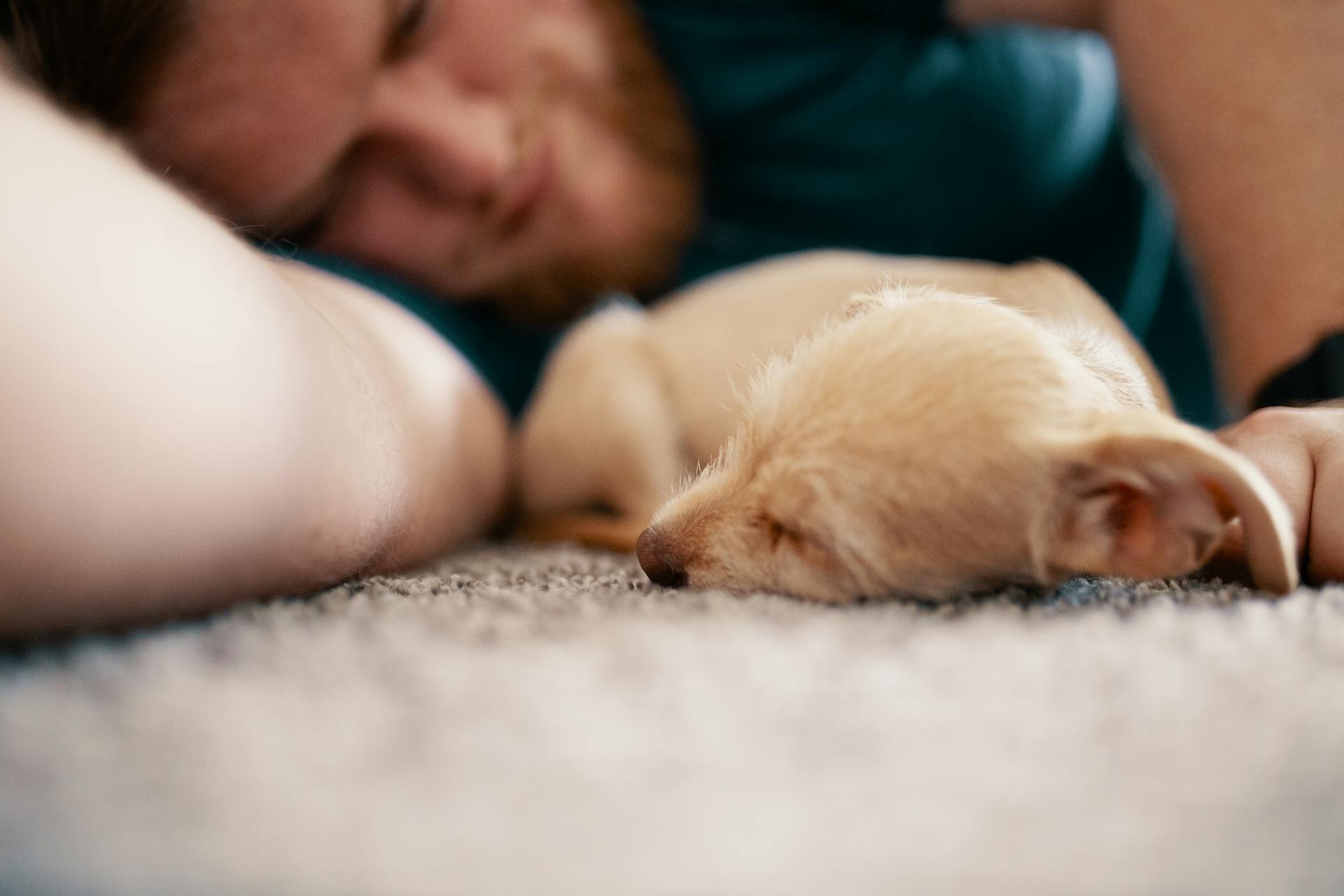
80% sleep efficiency sits within the range clinicians consider acceptable. And the gap between 80% and 83% represents minutes, not hours.
A larger study of 1,356 Australian adults published in Sleep Health found that owners who did not sleep with their dogs were actually more likely to wake up tired than those who did. The researchers suggested the dog’s presence provides a sense of comfort and security that helps with relaxation and sleep onset.
The honest picture: if your dog sprawls across you, wakes you with every position change, or has you clinging to three inches of mattress edge, your sleep is being disrupted and a dog bed placed right next to yours will give you most of the same benefits with less physical chaos. But if your dog settles and stays – the way Milo usually does – the data is largely in your favor.
Women, specifically, tend to sleep better with their dog than with their partner
I’ll include this finding because it keeps appearing across multiple studies and deserves more attention than it typically gets.
Research found that women reported improved sleep quality when sharing a bed with a dog compared to sharing with a human partner or a cat. Women described feeling greater security, and noted that dogs “stay put” – holding their position across the night with fewer disruptions than human partners.
A 2021 YouGov survey of 2,400 U.S. adults found that 24% said they would prefer to share a bed with their dog over a domestic partner.
I’m not going to draw any conclusions from this beyond the obvious one: dogs are consistent, warm, and do not steal the duvet. Those are underrated qualities in a bed companion.
For anxiety, depression, and PTSD, the proximity effect is significant
This reason goes beyond comfort into something more clinically meaningful.
In a study of veterans with PTSD service dogs, 57% reported that having their dog present helped ease nightmare frequency. Nightmares are among the most treatment-resistant symptoms of PTSD. The fact that a dog’s physical presence during sleep appears to reduce them points to something real about felt safety and physiological regulation during the night.
A study in Sleep Health found that 80% of adults with chronic pain found co-sleeping with their pets beneficial to their sleep, primarily because it reduced pre-sleep anxiety and loneliness.
Separate research found that 74% of pet owners report improvement in their mental health from pet contact, with co-sleeping potentially amplifying these benefits by maximizing nightly physical proximity.
Milo has no idea he is doing any of this. He is just choosing the warmest, most familiar-smelling spot available. But the effect is real regardless of his intentions.
Your dog is making a deliberate choice when they jump up
Here is the detail that I find most affecting about this whole topic.
Dogs sleep differently than humans – they cycle through REM more frequently, they stay alert to sounds, they shift position. But they choose where to sleep deliberately. Research shows that over 86% of puppies choose to sleep near a human when given the option. That’s not a trained behavior. It’s a preference that exists before training begins.
The first time Milo jumped into bed rather than going to his own, I assumed it was a one-off. By the third night I had stopped putting him in his own bed. He had made a choice, and I had decided to respect it. Two years later, the arrangement has not changed. He is pressed against my legs right now as I write this, not sleeping but doing the alert-napping thing where one ear tracks every sound in the apartment.
When your dog chooses to sleep against you, they are communicating something about how safe they feel in your presence. That trust runs in both directions – you sleep better because of them, and they sleep better because of you. The Mayo Clinic study found that dogs maintained a sleep efficiency of around 85% regardless of whether they slept in the bed or elsewhere in the room. They adapt. But given a free choice, they choose proximity to their person every time.
That choice is worth something.
Try This If You Do Not Want Your Dog on Your Bed
A dog bed placed directly alongside yours captures most of these benefits – the scent proximity, the presence, the security – while reducing the physical disruptions that come with actual bedsharing. If your sleep is genuinely suffering, that’s the middle path rather than full separation.
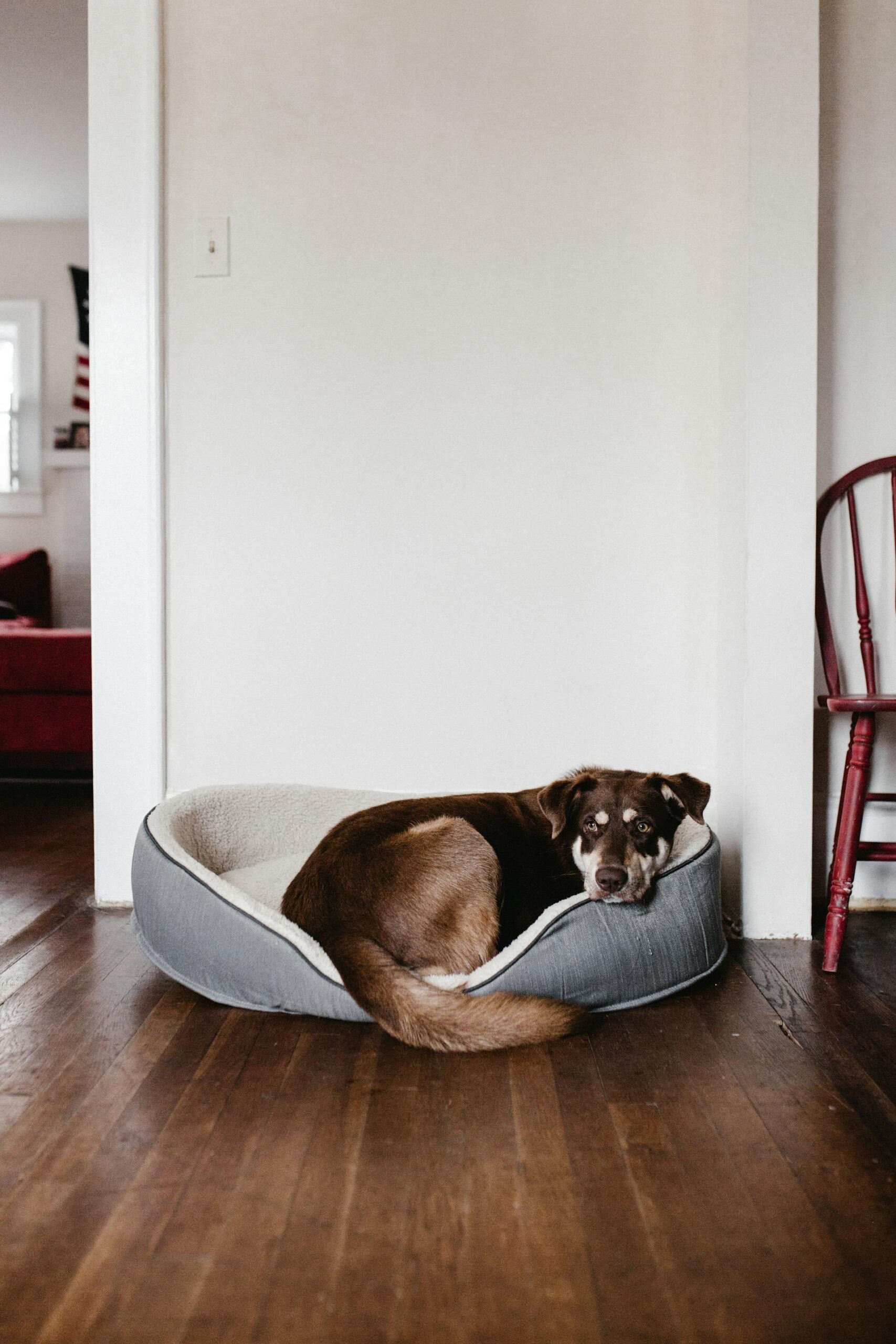
But if your dog settles, and your sleep is fine, and you wake up with a warm weight somewhere near your feet or legs: the research is on your side. Your instinct to let them stay was not a failure of discipline. It was 15,000 years of a working relationship doing exactly what it was designed to do.