

Milo, my Jack Russell Terrier, once spent five minutes staring at a hole in our backyard fence. He didn’t blink. He barely breathed. His entire body was locked in a point, nose pressed to the gap, muscles trembling with tension. On the other side of that fence, a gopher was going about its day, completely unaware it had become my Jack Russell Terrier’s entire universe.
I could have called his name a hundred times. I could have opened a bag of treats right behind him. When Milo’s prey drive kicks in, I don’t exist. The world narrows to predator and prey, and everything else disappears.
Prey drive is the hardwired instinct to hunt. It’s not aggression, disobedience, or a training failure. It’s genetics doing exactly what generations of selective breeding designed them to do. For some dogs, it’s a faint background hum. For dogs like Milo, it’s the dominant force shaping their behavior.
Understanding prey drive changed how I live with my dog. It explained why recall training that worked perfectly at home fell apart the second a squirrel appeared.
What prey drive actually is
Prey drive is a survival instinct inherited from wolves. Dogs are predators. Domestication softened some edges and redirected others, but it didn’t erase the fundamental wiring that says small, fast-moving things are worth chasing.
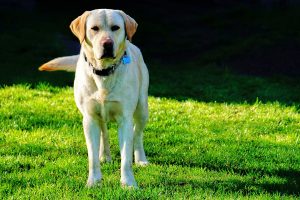
The full predatory sequence has seven steps: search, stalk, chase, grab-bite, kill-bite, dissect, and consume. Most pet dogs have incomplete sequences. A Border Collie might search, stalk, and chase sheep but never bite. A Labrador retriever chases and grab-bites a tennis ball but stops there. Milo runs through the first five steps with rodents if I don’t intervene, which is exactly what his breed was designed to do.
Prey drive sits separate from aggression. Milo has never shown aggression toward another dog. He’s been to daycare, dog parks, and group training classes without incident. Put him in a room with a hamster, and his brain shifts into hunt mode. The behaviors look different. Aggression involves growling, raised hackles, stiff posture, direct staring with hostile intent. Prey drive looks like focus, excitement, stalking posture, and explosive forward motion when the target moves.
The intensity exists on a spectrum. Some dogs barely react to wildlife. Others, like Milo, organize their entire day around the possibility of encountering something chaseable. A low-drive dog might glance at a squirrel and keep walking. A high-drive dog sees the same squirrel and stops functioning as a pet.
Breed differences and individual variation
Terriers were bred to hunt vermin. Jack Russells specifically were developed in England in the 1800s to bolt foxes from their dens and kill rats in barns. The dogs who succeeded at this work were fast, fearless, and relentless. Those are the traits that got passed down through generations. Milo carries that genetic legacy in every cell.
Different hunting breeds express prey drive in different ways based on what they were designed to do. Sighthounds like Greyhounds and Whippets are movement-triggered. A rabbit can sit still ten feet away and they might not notice, but the second it runs, the dog explodes into a chase. Scent hounds like Beagles and Bloodhounds follow smell trails with single-minded focus, nose to the ground, oblivious to everything else. Herding breeds like Border Collies and Australian Shepherds have modified prey drive that stops at the chase and stalk, redirected into controlling livestock movement. Retrievers were bred to have soft mouths and high fetch drive without the kill component.
Companion breeds typically have lower prey drive because they weren’t selected for hunting work. Cavalier King Charles Spaniels, Shih Tzus, and Havanese were bred to sit on laps and keep people company. You’ll still find individual dogs in these breeds with higher drive, but it’s less common.
Even within a single breed, variation is huge. I know three other Jack Russell owners in my neighborhood. One dog couldn’t care less about squirrels and spends walks sniffing bushes peacefully. Another is interested but manageable. The third makes Milo look calm. Genetics load the gun, but individual temperament pulls the trigger.
Mixed breed dogs are a genetic lottery. You might get a Lab-Poodle mix with the Lab’s fetch drive and the Poodle’s handler focus, or you might get one with neither. Without knowing the specific dogs in the lineage and how traits combined, you’re working with what you observe rather than what you expected.
Age affects expression too. Puppies show early signs of prey drive through play, but it intensifies as they mature. Milo was interested in bugs and birds as a puppy. By eighteen months, he was attempting to dig through our fence to reach the neighbor’s chickens. Senior dogs often maintain the interest but lose the physical ability to act on it with the same intensity.
How prey drive affects daily behavior
Our morning walks used to be battles. Milo would walk calmly until a squirrel ran across the sidewalk fifty feet ahead, and then he’d hit the end of the leash like he’d been shot from a cannon. I’d get yanked forward, he’d be choking himself on the collar, and the squirrel would be long gone while Milo strained and whined.
The backyard became a war zone. The cat next door sits on the fence and grooms herself in the sun. Milo has learned he can’t reach her, but that doesn’t stop him from monitoring her location every time we’re outside. If she moves, he moves. If she jumps down, he’s at that section of fence immediately.
Birds trigger a different response. Milo stalks them. He’ll see a crow pecking at something in the grass and drop into a crouch, creeping forward one slow step at a time. He’s never caught one, but the instinct to try is irresistible.
Joggers and bicyclists activate the chase response even though Milo has no interest in actually catching a person. The movement pattern triggers the instinct. I’ve had to work specifically on desensitization because his lunging toward passing cyclists was dangerous for everyone.
On trails, Milo behaves differently than in our neighborhood. The stimulation level is higher. More smells, more wildlife, more opportunity. His prey drive stays elevated the entire time we’re out. In the neighborhood, he’ll walk calmly between squirrel sightings. On a trail, he’s in hunt mode constantly.
How to Manage Dogs’ Prey Drive
You can’t train out prey drive. It’s genetic. What you can do is manage the dog’s environment, teach impulse control, and provide appropriate outlets. My expectations with Milo are realistic. He will always want to chase small animals. My job is to give him structure so that desire doesn’t run his life or endanger him.
Physical exercise that engages prey drive in safe ways makes a massive difference. I use a flirt pole in our backyard three times a week. It’s a long pole with a rope and lure attached, like a giant cat toy. Milo chases it, pounces on it, and gets to satisfy the grab-bite part of the sequence. After a fifteen-minute session, he’s calmer for the rest of the day.
Fetch works for some dogs but not Milo. He’ll chase a ball once or twice and then lose interest because balls don’t behave like prey. The flirt pole moves erratically, changes direction, and mimics an animal trying to escape. That keeps him engaged.
Mental stimulation burns energy that might otherwise go into obsessive prey watching. I hide treats around the house and send Milo to find them. The searching activates his scent-tracking drive in a controlled way. Puzzle toys that require manipulation to access food give him problem-solving work that tires his brain.
Training impulse control is ongoing. The “leave it” command means stop pursuing what you’re interested in and focus on me instead. We practice this with low-value items first, like a toy on the ground, and gradually increase difficulty to things Milo actually wants. I’ve gotten to the point where I can sometimes interrupt his fixation on a squirrel if I catch it early enough.
The “look at that” game builds calm responses to triggers. When Milo sees a squirrel, I mark the moment he notices it by saying “yes” and giving him a treat. The goal is to create an association where seeing prey means looking back at me for a reward rather than lunging forward. This takes hundreds of repetitions and doesn’t work when his arousal is too high, but it’s helped on walks.
I use two types of walks. Structured walks are about impulse control and loose-leash manners. These happen in areas with moderate distraction where I can manage the environment. Sniff walks are decompression time where Milo gets to follow his nose and investigate smells without much interference from me. Both serve different purposes.
Preventing rehearsal matters. Every time Milo successfully chases something, the behavior gets reinforced. I don’t let him practice the full sequence. If a squirrel appears and he starts to lunge, I interrupt before he commits fully. This means constant vigilance on my part.
Environmental management at home reduced Milo’s frustration. I blocked his access to the front window with furniture. He can’t spend all day watching for triggers he can’t reach. The backyard fence got reinforced at the bottom so he can’t dig under it. These changes didn’t eliminate his drive but removed opportunities for obsessive behavior.
What worked specifically with Milo was consistency over years. The flirt pole sessions, the impulse control training, the managed environment, and the appropriate outlets all combined to create a dog who still has high prey drive but doesn’t let it destroy his quality of life or mine.
When prey drive becomes a safety issue
Dogs who bolt after wildlife during hikes or walks can cover ground faster than you’d believe. Milo is small, but he can hit fifteen miles per hour in short bursts. A scent trail will pull a dog away from familiar territory into areas they’ve never been, and once they’re out of sight, finding them becomes a search operation rather than a simple recall.
The scent trail lock-on is different from visual chasing. When Milo is following a smell, his nose stays glued to the ground and his brain shuts off everything else. I’ve stood ten feet behind him calling his name while he tracked a rabbit trail through brush, and he genuinely doesn’t hear me. The focus is complete.
This is where GPS dog collars help. These trackers use satellite data to track your dog, and you can check it on your phone. Milo’s collar has a GPS unit that sends his location to my phone. I can see him when he is a quarter mile northeast, stationary.
Livestock encounters have legal consequences beyond lost dog scenarios. If your dog chases or injures chickens, sheep, goats, or cattle, the property owner can shoot the dog in many states. Farmers don’t call animal control first. Milo has a strong enough prey drive that free-ranging chickens would trigger a chase response, which is why I’m careful about where we hike and whether livestock are present.
Road safety is another serious issue. Some dogs chase cars the way Milo chases squirrels. The movement triggers the drive, and the dog bolts into traffic. I’ve worked with Milo around roads specifically because bicycles and motorcycles used to trigger his chase response.
GPS collars provide peace of mind for owners of high-prey-drive dogs who might disappear into the woods following a scent trail. The collar I use updates Milo’s location every few seconds when he’s moving. If he bolts, I can track him in real time rather than guessing which direction he went. The subscription costs me about fifteen dollars a month, which is worth it for the number of times it’s helped me find him quickly.
Off-leash freedom isn’t safe for every dog. Milo earned it through years of training, and even so, there are environments where he stays leashed because I know his drive will override his training. Dense cover where I can’t see him, areas with heavy wildlife, trails near roads, anywhere with livestock. Freedom is conditional on safety.
Long-line training offers a middle ground. A thirty-foot line gives the dog room to explore while keeping them physically connected to you. Milo spent months on a long line before I trusted him off-leash, and I still use it in new areas where I don’t know what triggers might appear.
Knowing your dog’s limits means being honest about what they can handle. Milo’s recall is solid until it isn’t. A rabbit at close range will override everything I’ve trained. I’ve accepted that and plan accordingly.
Living successfully with a high-drive dog
Milo’s prey drive isn’t a flaw I wish I could fix. It’s part of what makes him the dog he is. The same intensity that sends him after squirrels makes him excellent at barn hunt, a sport where dogs find rats in a maze of hay bales. His focus and determination are assets in the right context.
The relationship between physical satisfaction and behavioral calm is direct. On days when Milo gets a flirt pole session and a long walk, he’s relaxed at home. On days when he doesn’t get enough activity, he’s restless, whiny, and more reactive to triggers.
I’ve built our routine around his needs. Morning walk before the neighborhood gets busy. Flirt pole sessions in the backyard. Puzzle feeders for meals instead of a bowl. Training games that engage his brain. These aren’t optional extras. They’re requirements for living peacefully with a high-drive terrier.
Professional help is worth considering if management strategies aren’t enough. I worked with a trainer who specializes in prey drive when Milo was two and I was struggling with his recall around wildlife. She taught me the “look at that” game and helped me understand that I was asking for behaviors Milo wasn’t physically capable of when his arousal was too high.
Building a life around your dog’s nature is easier than fighting it. I don’t take Milo to outdoor cafes where he’ll be overstimulated by passing dogs and people. I don’t expect him to lie calmly in the yard while squirrels run the fence line. I don’t assume his training will hold in every environment. These aren’t limitations. They’re acknowledgments of reality.
Milo will always be a terrier. He’ll always lock onto movement and smell like his survival depends on it. Understanding his prey drive has made me better at reading his body language, predicting his behavior, and keeping him safe. The work continues. His drive doesn’t diminish with age, and my management can’t get sloppy.
He’s asleep next to me now, twitching and whining softly. Probably dreaming about the squirrel that got away this morning. Tomorrow he’ll wake up ready to hunt again, and I’ll wake up ready to manage it. That’s the deal we’ve made, and it works for both of us.